Looking back at my visits and time on Islay as a resident I notice that so many things have changed. People arrived on the island from elsewhere, started businesses and made a lasting impression on locals and visitors.
I know of quite a few people who lived on Islay for a shorter or longer period and decided to leave again for various reasons. Our family is one of them. It’s usually the incomers who leave again, the locals have their lives on the island, are born there and have a much stronger bond with the place. They often see their kids move to the mainland to study or work, and then return to the island when they are older.
In the early days we often had dinner at the Harbour Inn, owned by Neil and Carol Scott. They sold the restaurant and left the island later. Other folk we knew very well were Jeremy and Tink Hasting and their kids. Jeremy ran the Islay Birding Business and Tink worked in Keills Primary. They also taught their kids in homeschool and lived in a tiny cottage in Port Charlotte. They too left the island when the kids got older and moved South.
French Television once made a really beautiful documentary about Islay featuring Jeremy and his family. It’s embedded below.
Islay Birding Trip
When the Islay Info Website got more and more visitors and the number of pages was increasing it was also time for me to learn a lot more about the island. That’s how we got in touch with Jeremy Hastings from Islay Birding. In 2006 we did a birding tour with Jeremy and that was a real eye-opener. During that trip we learned a lot about the island, the people and the wildlife. I still remember everything vividly from that day, probably because I wrote a travel report of the Birding Trip. It is included below. Unedited, just as I wrote it in 2006. Enjoy.
Islay Birding Trip Report 2006
One great thing about Islay is that its big, and I don’t mean in size but in the variety and numerous possibilities it offers. This year was already our third trip to Islay but we felt we missed a lot of information, places, wildlife etc. Therefore a trip with Jeremy Hastings from Islay Birding was the thing that was high on our “todo” list for this year.
We booked Jeremy for Monday the 15th and exactly on time, 09.45 he picked us up at our cottage near Ballygrant. The weather changed dramatically over the weekend and people around us told that last week was wonderful. We however were stuck with good old clouds, a bit rain from time to time and temperatures that would fit march, not may. Welcome to Islay.
After shaking hands with Jeremy and introducing ourselves to Bobby and David, the two other participants, we got into Jeremy’s Defender and headed back towards Ballygrant and went left in the village towards Mulindry to take the Glen Road. A single track road from Ballygrant to the B8016.
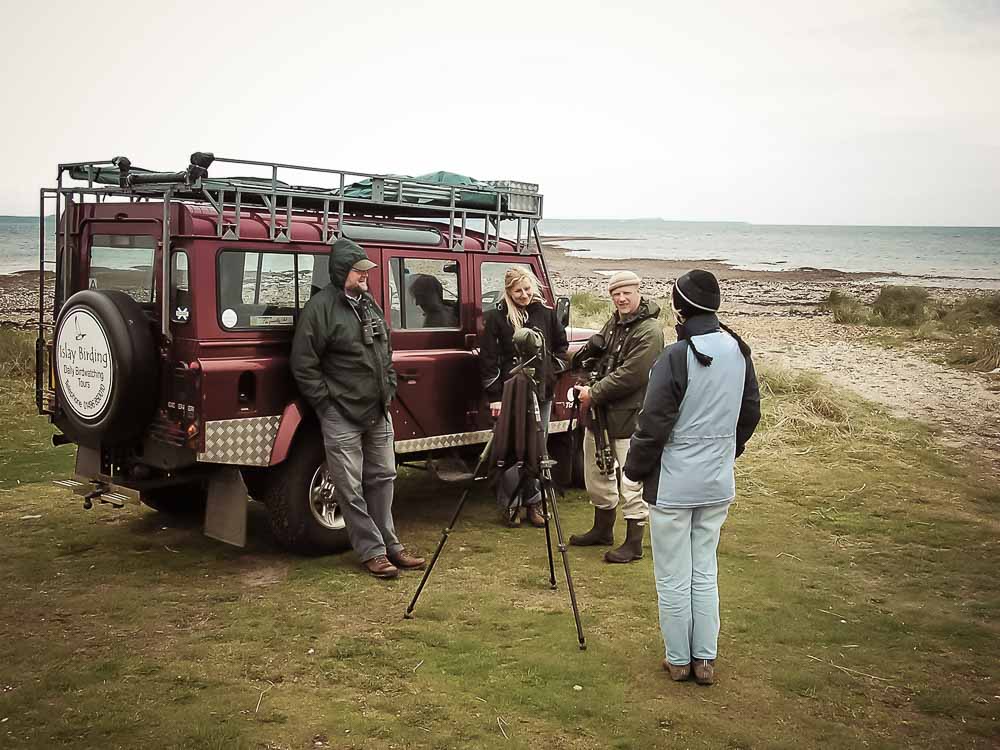
Just after the Dunlossit Estate Office we stopped on a hill overlooking meadowland and had our first encounters with ravens and Gulls. Driving on passing Knocklearoch Farm and the standing stones we noticed how deserted this part of Islay actually is and groups of deer are clearly visible from the roadside. Some of them are almost 300Kg and knock a man down when they ran in to you. In this part of Islay live more than 2000 deer and it’s the responsibility of the estate owner to keep the deer population under control and fit. (guess what they eat for Christmas)
The view from the Defender, Jeremy’s car, is excellent and with the binoculars provided we can easily spot the abundant Wildlife. Suddenly Jeremy stops and jumps out of the car, we look surprised at each other, and Jeremy guides us to a nearby flooded meadow and shows us beautiful orchids really in the middle of nowhere. What a beautiful view to see these delicate flowers in the middle of this harsh and rugged terrain.
After passing Barr farm Jeremy tells us about Dun Nosebridge, an ancient fort built on a hilltop. We pass Cattadale farm and turn right at Cluanach, a delightful cottage in a quiet part of Islay. After we cross the bridge at river Laggan we stop and Jeremy takes us on a woodland track that leads to Dun Nosebridge.
After we continue we head towards Bridgend and stop at the public toilets before we continue to Loch Indaal. Never miss an opportunity Jeremy says and I regret later that I didn’t listen. We drive on and park the car at the head of Loch Indaal opposite Islay House which is now owned by an American Army Captain who lives there on his own.
After Jeremy sets up the special monoculars to spot Oyster catchers He makes us a cop of coffee and a natural tea for David because of his stomach problems. Our first bushcraft lesson this day. Besides Birding where Jeremy originally started with, he is also very good in survival in the nature. Might come in handy! In the meanwhile we have a great time and talk with the five of us and almost forget where we came for. Jeremy is pleasant company and with great enthusiasm he tells about Islay and everything connected. The four of us listen carefully and learn more in a few hours with Jeremy than days of studying in books.
The wind is picking up a bit and we drive on to stop at Uiskentuie where we spot Arctic Terns at the shoreline. These birds are migrants and will probably head on today or tomorrow towards Iceland. We continue slowly over the raised beaches and make a second stop at “the spit” at the head of Loch Indaal. Here we get out of the car and use the monoculars again for some great views over the beaches.
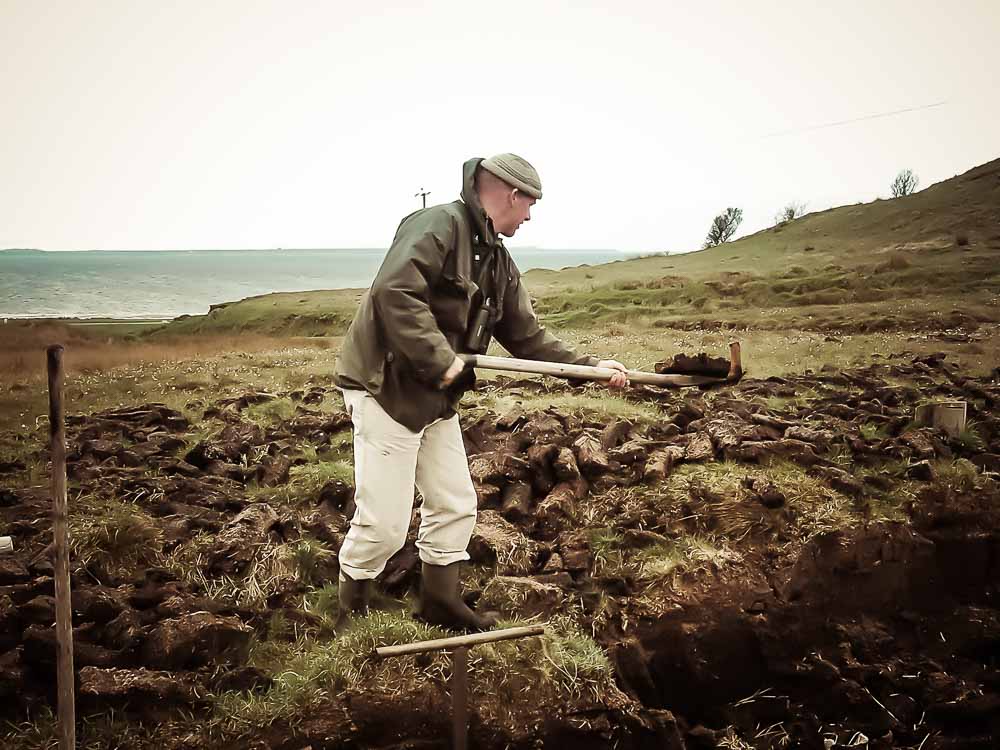
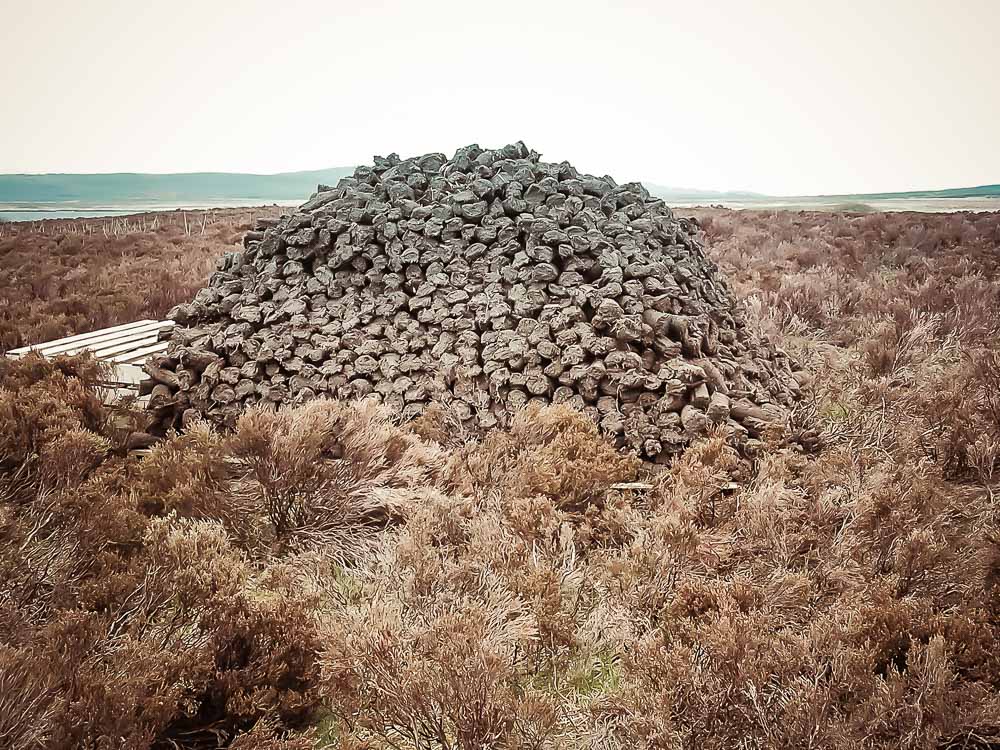
From here we continue over a very little track passing Tynacoille where Jeremy demonstrates his peat cutting skills and shows us how it is done. Peat cutting is not only for the whisky industry but lots of people on Islay still use peat for heating their houses. For 25 pounds, which they pay to the landowner, the people on Islay can cut peat as much as they need for a whole winter. This peat cutting takes about 7 days which gives a 6 months supply. Cheap compared to heating with oil which costs about 1000 pounds a year depending on the property. Just above the peaty area we see some little hills in lines next to each other and Jeremy explains that these are lazy beds. Lazy beds were used for planting vegetables and every year they are covered with seaweed which causes the lazy bed to grow in height.
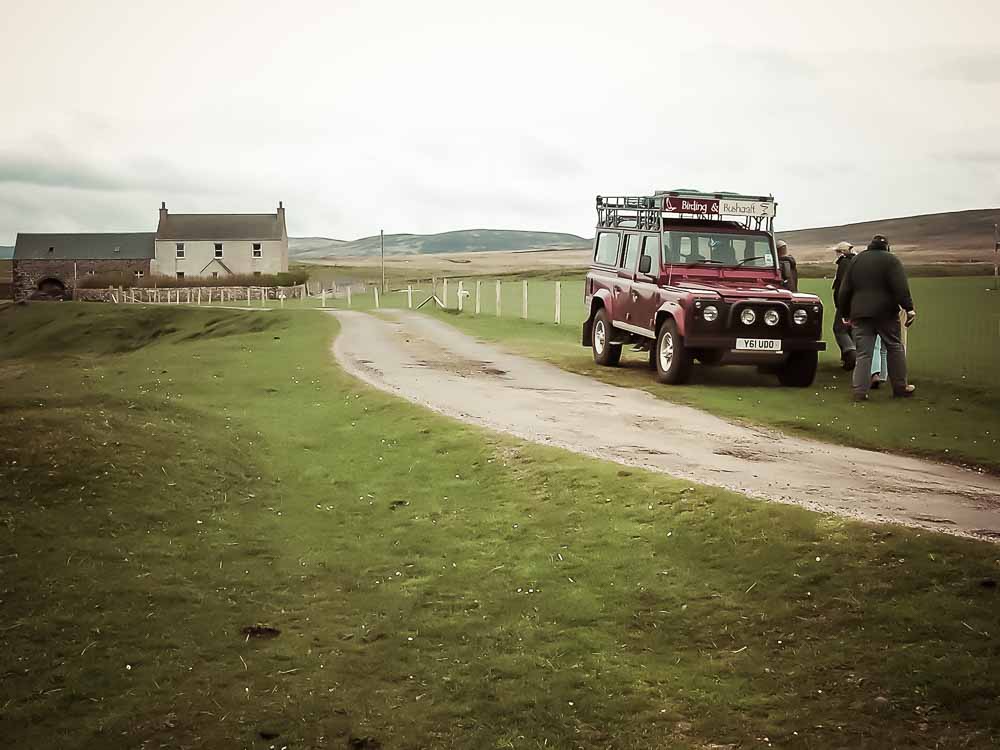
We now turn right on the B8018 towards Kilchoman and pass Foreland House. Here we have amazing views over the Gruinart Flats towards Loch Gruinart (pronounce grinjart) and Jeremy stops the car near the Sunderland farm. It is here where we have our first encounter with a chough (pronounce tjaff). The chough is a little bit below us in meadow and we have a great view of this special and endangered bird. Since this year the chough has a protective status and almost 5 percent of Uk’s chough population live on Islay.
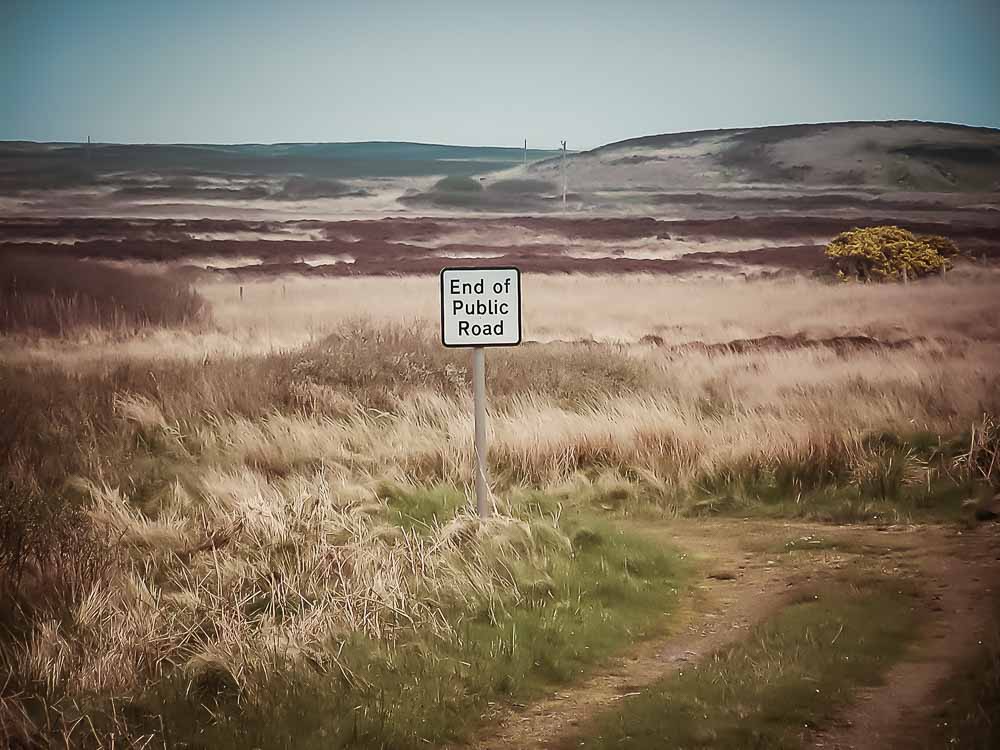
We now continue towards Kilchoman and turn right at a little track that takes us to the shore of Loch Gorm. A few hundred yards from the shore is a little island and in the early days the home of a castle and almost 14 people. You cant imagine 14 people living on such a small island. We continue driving very slowly on this track and stop near a ruin where the “road ends”. A few years ago the road was washed away after flooding and several people from the Argyll council had a look, came back to have another look with even more people and decided to put up this sign:
We have a little walk around the very tiny remains of a cottage, still seeing the grasslands they used and spot owl droppings on an abandoned car. Probably a good place for the owl to hunt. Here I finally can use “the loo” and remember Jeremy’s words at Bridgend now almost two hours ago. We continue after the road end crossing a burn and come back on the B8018 which we cross to head for Aoradh and pass the RSPB visitor centre and bird hide.
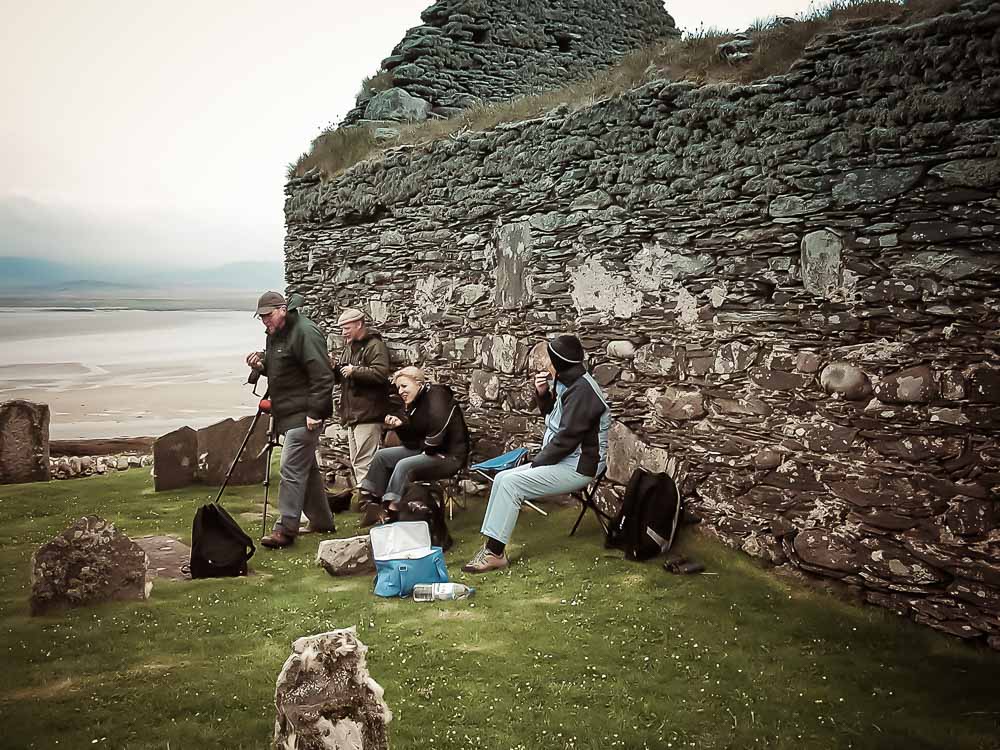
We continue towards Kilnave chapel for lunch passing Garra Eallabus which is sold to some London guy for half a million pounds. Not a bad place to live if you ask me. Jeremy parks the car outside the Kilnave churchyard and have a very entertaining lunch. Jeremy knows lots of jokes and entertains his party very well. In the meanwhile choughs fly over our heads direction Tayovullin where in the early days a few hundred people lived and worked in the herring business. Now there are only a few remains of the settlement. After our hilarious lunch our entertaining speaker takes us back to the Defender where we travel back towards Gruinart Flats which are actually created as a kind of polder by a Dutchman around 1850 to create grasslands for the geese. Normally the sea came as far as Druim na h-Erasaid but now it stops at the little dyke built by this Dutchmen. I felt home immediately.
These grasslands are the habitat of almost 60 pairs of Lapwings that breed here and here we see ravens and Lapwings fighting each other. Ravens are knows to hunt together to eat the Lapwings eggs but the Lapwings don’t give up easily and win their battle this time. Here Skylarks sing their pretty song and we stop at a little stretch of taller grasses where a corncrake was recently heard. We have no luck today and the Corncrake is either gone or just silent. These secretive birds are seldom seen but you can easily hear them, alas not today.
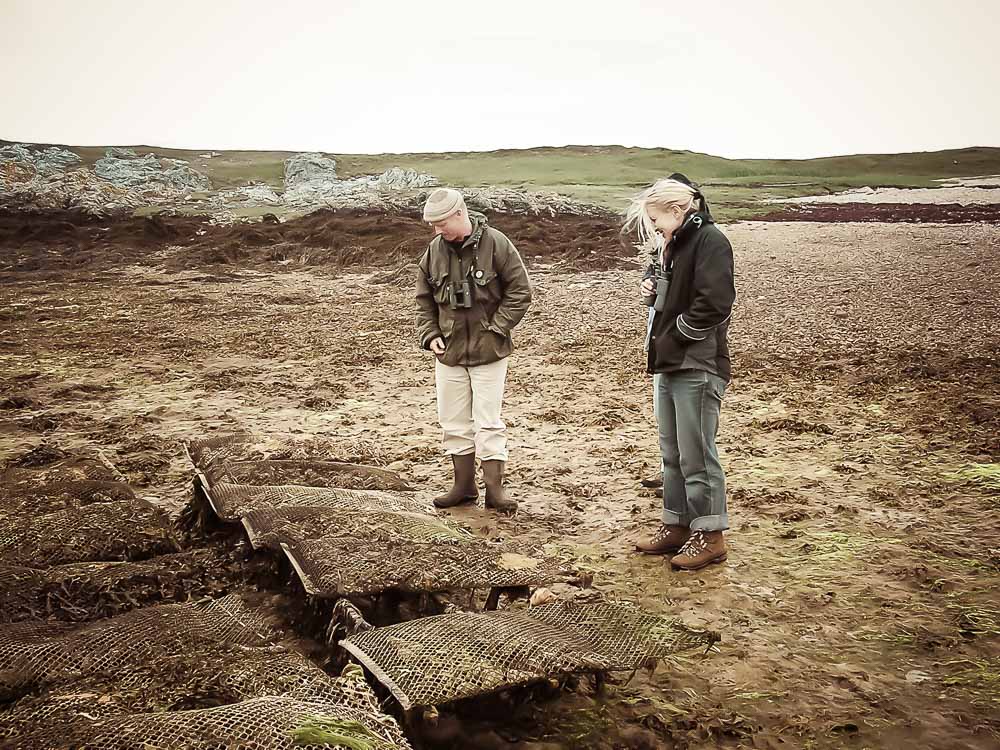
Before we head back home Jeremy takes us to the Eastern shore of Loch Gruinart where we spot a breeding common gull and have a look at the way oysters grow. The oyster beds belong to Craigens farm and later on we visit Craigens farm too buy some Oysters for ourselves.
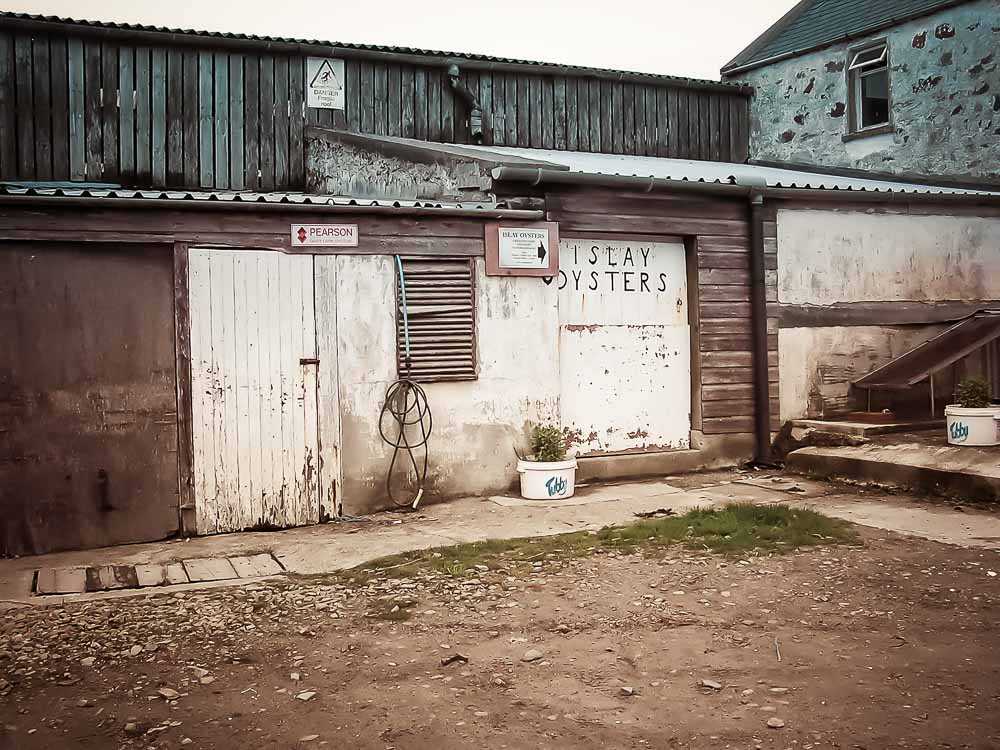
After visiting the Craigens farm for our fresh supply of Oysters and our cooking tips from Jeremy we head back to our cottage passing a little track that leads us behind Islay House. The walled garden is now owned by the Islay community and was a present from the new owner of Islay House.
After more than six hours we arrive in our cottage at 4 pm. So many impressions, so many birds spotted, so many heard about Islay, this was a magnificent day to never ever forget. I can only say one thing: If you go to Islay and are interested, and who isn’t, you cannot do without such a tour. This is not about birding only but about everything Islay has to offer and that is a LOT. With a guide like Jeremy who knows so much and tells with such enthusiasm it is worth every pound and you have a guaranteed terrific time, no matter what the weather is like. Compliments Jeremy and you can definitely see us back next year.
And the birds? An astonishing number of 57 different birds in one day. Here they are: Cormorant, Shag, Grey Heron, Mute, Swan, Greylag Goose, Shelduck, Teal, Mallard, Eider, Red Breasted Merganser, Buzzard, Pheasant, Oystercatcher, Ringed Plover, Lapwing, Dunlin, Whimbrel, Curlew, Redshank, Black Headed Gull, Common Gull, Lesser Black Backed Gull, Arctic Tern, Rock Dove, Collared Dove, Skylark, Sand Martin, Hse Martin, Meadow Pipit, Pied Wagtail, Wren, Dunnock, Robin, Whinchat, Stonechat, Wheatear, Black Bird, Song Thrush, Sedge Warbler, Willow Warbler, Coal Tit, Blue Tit, Great Tit, Chough, Jackdaw, Rook, Hooded Crow, Raven, Starling, House Sparrow, Chaffinch, Greenfinch, Goldfinch, Linnet, Reed Bunting. Impressive list isn’t it?


Leave a Reply